

On September 10, 1976, an Indian Airlines flight carrying 83 passengers and crew took off from Delhi’s Indira Gandhi International Airport, bound for Mumbai. What began as a routine domestic flight quickly spiraled into a nightmare that would go down as one of the most dramatic hijackings in aviation history. The plane, low on fuel and under the control of armed hijackers, was forced to land in Karachi, Pakistan, where a tense standoff unfolded, laced with deception, danger, and a daring rescue.
A Routine Flight Turns Chaotic
As the plane cruised toward Mumbai, six young men aboard began acting suspiciously. They rose from their seats, exchanging cryptic gestures before splitting up. Some moved toward the cockpit, while others positioned themselves strategically throughout the cabin. Before anyone could react, two of the men stormed the cockpit, brandishing pistols and holding them to the heads of Captain B.N. Reddy and co-pilot R.S. Yadav. Outside, their accomplices waved weapons, shouting commands as panic erupted among passengers. The chilling cry of “Hijack! Hijack!” filled the air.
The hijackers, now in full control, demanded the plane be flown to Libya—a destination far beyond the aircraft’s capabilities. Captain Reddy, maintaining his composure under pressure, explained the dire situation: the plane had been circling for too long, burning through its fuel reserves. There was barely enough left to return to Delhi or divert to Jaipur, let alone make an international journey. Libya was out of the question without additional fuel, navigation maps, and air traffic control support.
A Desperate Diversion to Karachi
The hijackers, undeterred, debated their next move. Unwilling to return to Delhi, they ordered Captain Reddy to redirect the flight to Karachi, Pakistan. Seizing a brief moment, the pilot sent a covert distress signal to Delhi’s air traffic control, alerting authorities to the hijacking. Soon after, the plane touched down at Karachi Airport, far from its intended destination, with 83 lives hanging in the balance.
Hours passed with no communication from the hijackers, who seemed to relax on Pakistani soil. Meanwhile, the Indian government issued a stern warning to Pakistan: any harm to the passengers or crew would have severe consequences. Pakistan, under pressure, agreed to launch a rescue operation, assigning the task to its military.
A Deceptive Rescue
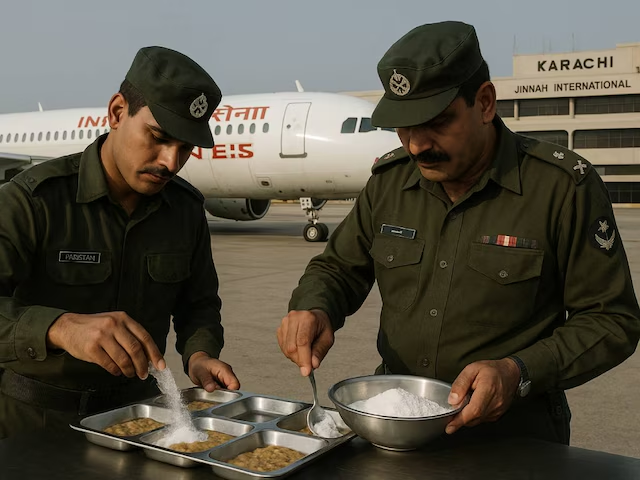
What followed was a masterclass in subterfuge. The Pakistani army, tasked with neutralizing the threat, approached the situation with cunning. They extended hospitality to the hijackers, offering hearty meals and an assortment of drinks. Unbeknownst to the hijackers, the food and beverages were laced with a powerful sedative—referred to in some accounts as a “sweet poison.” Within hours, the hijackers succumbed to the effects, falling unconscious one by one.
With the hijackers incapacitated, Pakistani commandos stormed the plane, swiftly apprehending them without resistance. The six men, later identified as M. Ahsan Rathore, Syed Abdul Hameed Diwani, Abdul Rashid Malik, Syed M. Rafiq, Khwaja Ghulam, and Ghulam Rasool, were revealed to be Kashmiri terrorists. Their plan, though bold, had unraveled under the weight of their own miscalculations and Pakistan’s decisive action.
A Safe Return Home
With the hijackers in custody, the plane was cleared to return to India. On September 11, 1976, the Indian Airlines flight landed safely in Delhi, carrying all 83 passengers and crew unharmed. For those aboard, the ordeal was a harrowing brush with mortality—a journey that began with routine expectations and veered into the realm of the unthinkable.
The incident remains a stark reminder of the fragility of air travel in an era of heightened geopolitical tensions. Captain Reddy’s quick thinking, India’s firm diplomacy, and Pakistan’s strategic intervention ensured a crisis was averted, transforming a potential tragedy into a story of survival and resolve.
