

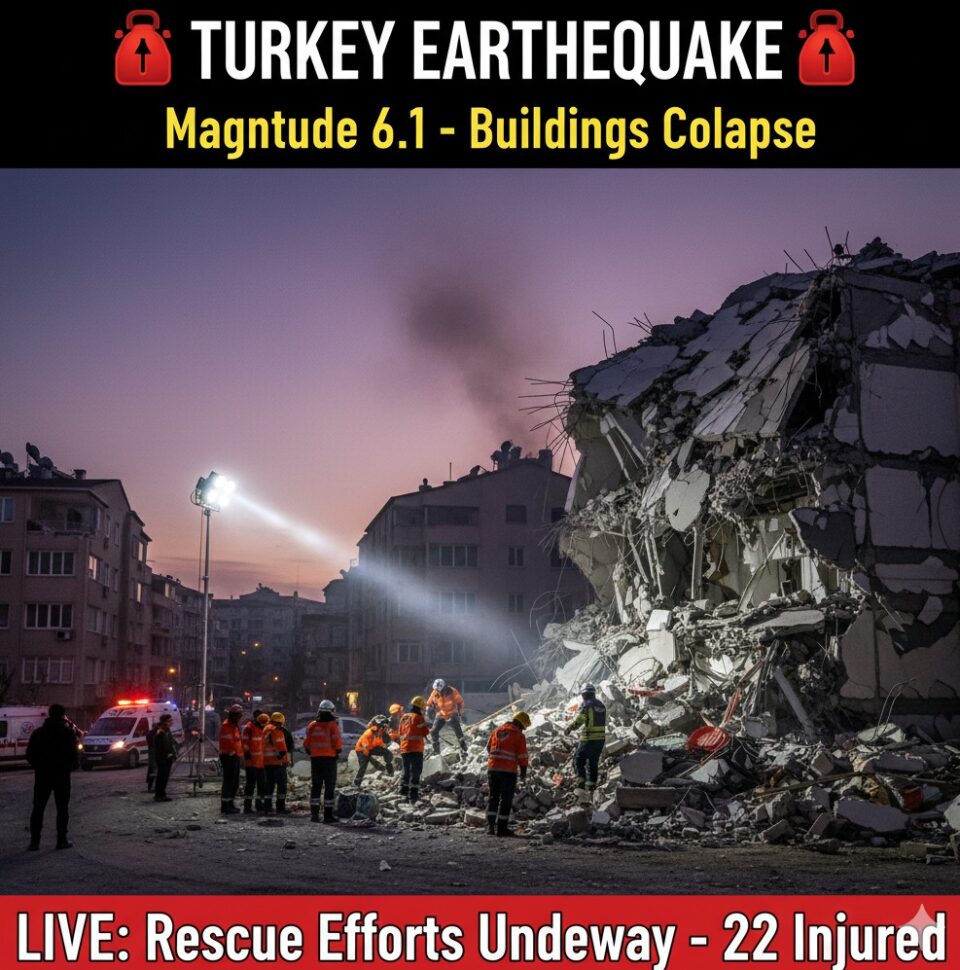
Magnitude 6.1 Earthquake Jolts Western Turkey
A powerful earthquake, registering a magnitude of 6.1 on the Richter scale, rocked western Turkey late Monday night, causing widespread panic and significant structural damage. The strong tremor, which struck the Balıkesir province, has raised immediate concerns about the full extent of the destruction in the already seismically active region. While initial reports thankfully indicate no immediate loss of life, the sheer force of the quake has led to the collapse of several buildings, and the fear of further aftershocks has driven many residents out of their homes.
Key Details of the Seismic Event

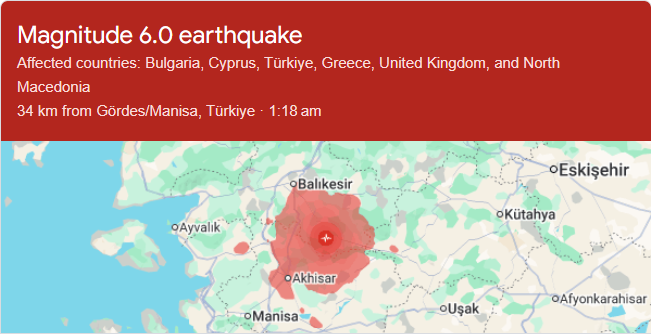
The earthquake’s epicenter was identified in the town of Sındırgı in the Balıkesir province. According to the Disaster and Emergency Management Authority (AFAD), the quake hit at 22:48 local time (1948 GMT) at a shallow depth of approximately 6 kilometers (3.7 miles), which typically intensifies the shaking felt on the surface and increases the potential for damage.
The intensity of the tremor was felt across a vast area, impacting several major provinces, including the country’s largest city, Istanbul, as well as Bursa, Manisa, and Izmir. This wide reach immediately prompted a swift and coordinated response from national disaster agencies and local authorities.
Focus on Damage and Casualties
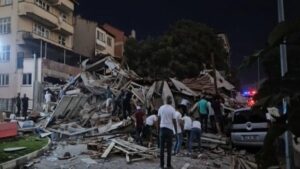
The most visible impact of the quake was the collapse of several structures in Sındırgı. Interior Minister Ali Yerlikaya confirmed that at least three unoccupied buildings and a two-story shop were brought down. Crucially, officials noted that these particular structures had already been weakened by a major earthquake in August. This highlights the vulnerability of pre-damaged infrastructure to subsequent seismic activity.
Despite the structural failures, the news remains largely positive regarding human casualties. Balıkesir’s Governor, Ismail Ustaoglu, reported that 22 people were injured, though most of these were related to panic, falls, or attempts to flee during the intense shaking, a common psychological and physical reaction to such a terrifying event. “So far, we have not identified any loss of life, but we are continuing our assessment,” Sindirgi district administrator Dogukan Koyuncu told the state-run Anadolu Agency, emphasizing that search and assessment efforts are ongoing.
Immediate Response and Community Shelter

Following the initial jolt, Turkey’s robust disaster response mechanism was immediately activated. Search and Rescue (SAR) teams from AFAD and other specialized units were rapidly deployed to Sındırgı and the surrounding areas. Their primary focus remains on any potential trapped individuals and a thorough assessment of all damaged structures to prevent further accidents.
The psychological impact on the local populace is profound. Many residents, terrified by the severe shaking and the subsequent aftershocks, opted to spend the night outdoors, unwilling to risk returning to their homes. Recognizing this fear and the onset of rain, local authorities moved swiftly to open mosques, schools, and sports halls to provide safe, temporary indoor shelter for the displaced residents. This community effort is critical in managing the immediate aftermath and providing relief.
A Region Accustomed to Seismic Threats
This latest earthquake is a grim reminder of Turkey’s precarious location on major geological fault lines. The same Sındırgı region had been struck just months prior in August by another Magnitude 6.1 quake, which tragically killed one person and injured dozens. The region has since endured a series of smaller, unsettling aftershocks.
The country is still recovering from the devastating Magnitude 7.8 earthquake in 2023 that ravaged southern Turkey and northern Syria, resulting in the loss of over 59,000 lives and the destruction of hundreds of thousands of buildings. The frequency of these events underscores the urgent need for strict building codes and continued disaster preparedness efforts across the nation.
Moving Forward: The Road to Assessment and Recovery
As the full light of day breaks, the comprehensive damage assessment can begin in earnest. Teams will focus on evaluating the stability of compromised buildings, clearing debris, and providing necessary aid to those affected. The immediate priority is the well-being of the injured and the provision of temporary shelter. While the lack of major casualties is a relief, the heavy financial and infrastructure toll will be felt in the coming weeks and months.
Also read:-Shaina Manimuthu Dominates: CRPF Jawan’s Daughter Achieve Gold at Asian Badminton Championships 2025
follow us:-Pentoday | Facebook
